
Home / H-Section Steel
H-Shaped Steel
Columns & Beams
Hot-rolled sections and fabricated H-section members for structural steelwork. Define the profile, member lengths, connections and finish around your project drawings.
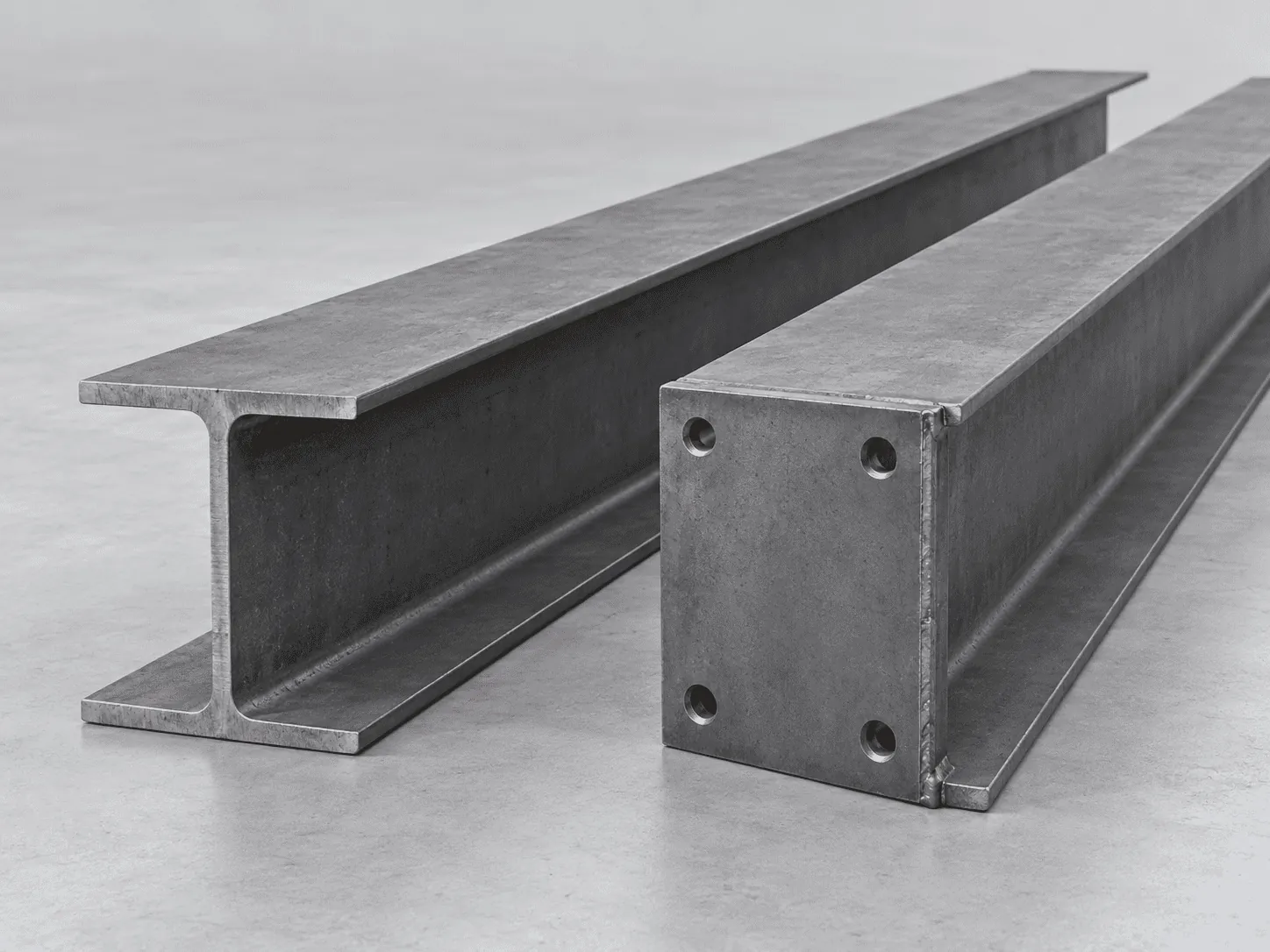
Product illustration
Two supply routes.
One clear specification.
Start with a standard section designation or a project-defined member. Then align the material, length and connection scope.
Hot-Rolled H-Sections
Specify the section series or designation, material grade and required cut lengths. Connection and surface requirements complete the supply scope.
Fabricated H-Section Members
Define flange and web geometry, member lengths and attached details from the engineering drawings and member schedule.
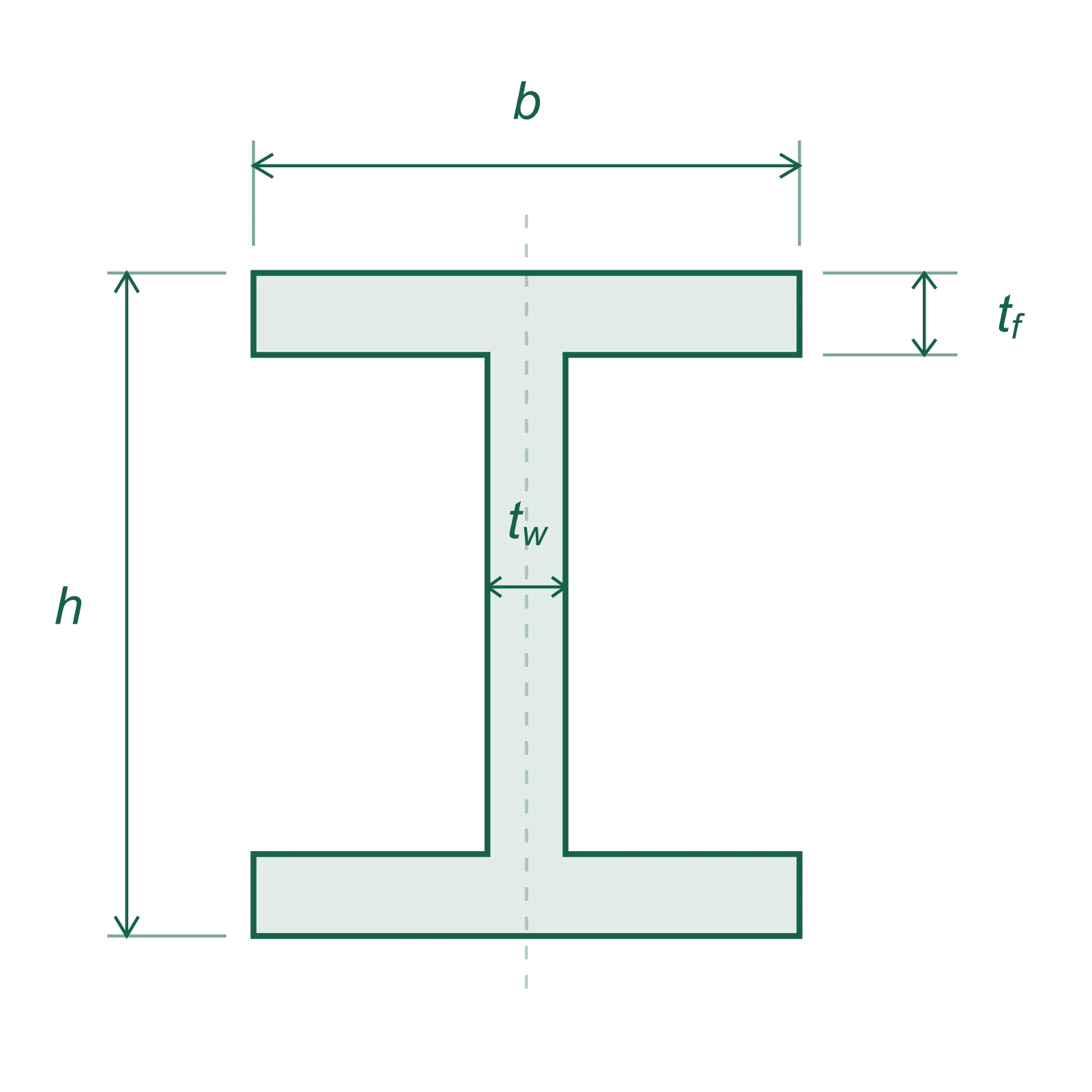
h = section depth · b = flange width · tw = web thickness · tf = flange thickness
Section & fabrication parameters
| Supply format | Hot-rolled sections or fabricated H-section members |
|---|---|
| Section geometry | Standard designation or project-defined h, b, tw and tf |
| Member length | Defined by the cut list or member schedule |
| Material | Grade and governing standard specified for the project |
| Connection details | End plates, stiffeners and drilled plates to drawings |
| Surface preparation | Shot blasting and coating requirements agreed for the project |
Section series, dimensions, steel grade and fabrication scope are confirmed against your project requirements.
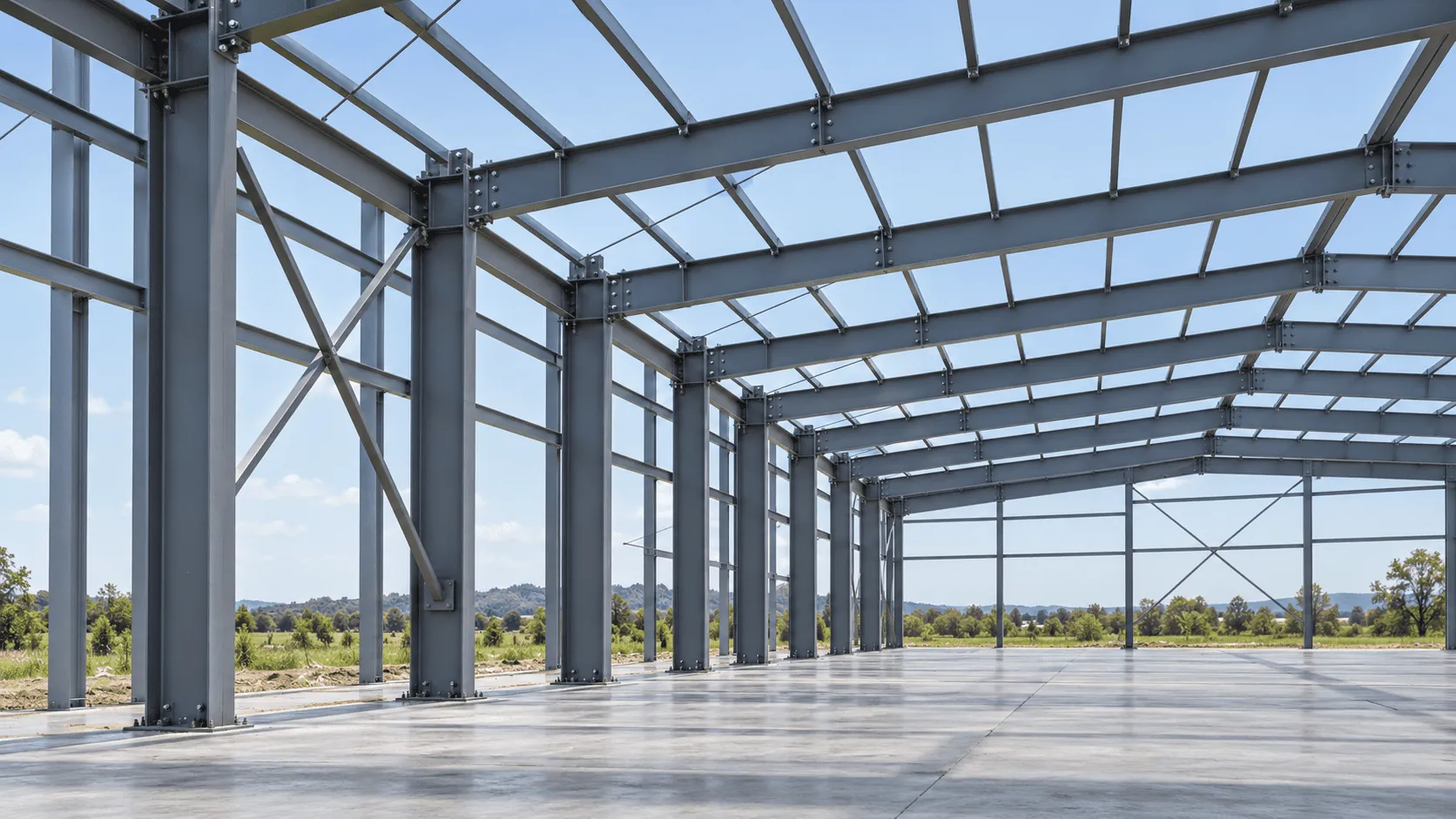
Illustrative structural application
Steel members within
the wider frame.
Consider each member together with the surrounding steelwork, its connection interfaces and the project sequence.
Column members
Vertical frame members with base, splice and beam-connection details defined by the project engineer.
Beam members
Members spanning between supports, with section selection, end details and attachment positions set by the structural drawings.
The connection is
part of the member.
A useful member specification goes beyond the H-section. Include the interfaces that connect it to the rest of the structure.
End plates & bolt holes
Plate geometry, hole positions and connection references follow the approved drawings.
Stiffeners & attachments
Assign stiffeners, brackets and other attached plates to the correct member reference.
Surface condition
Coordinate preparation, coating and connection contact surfaces with the project specification.
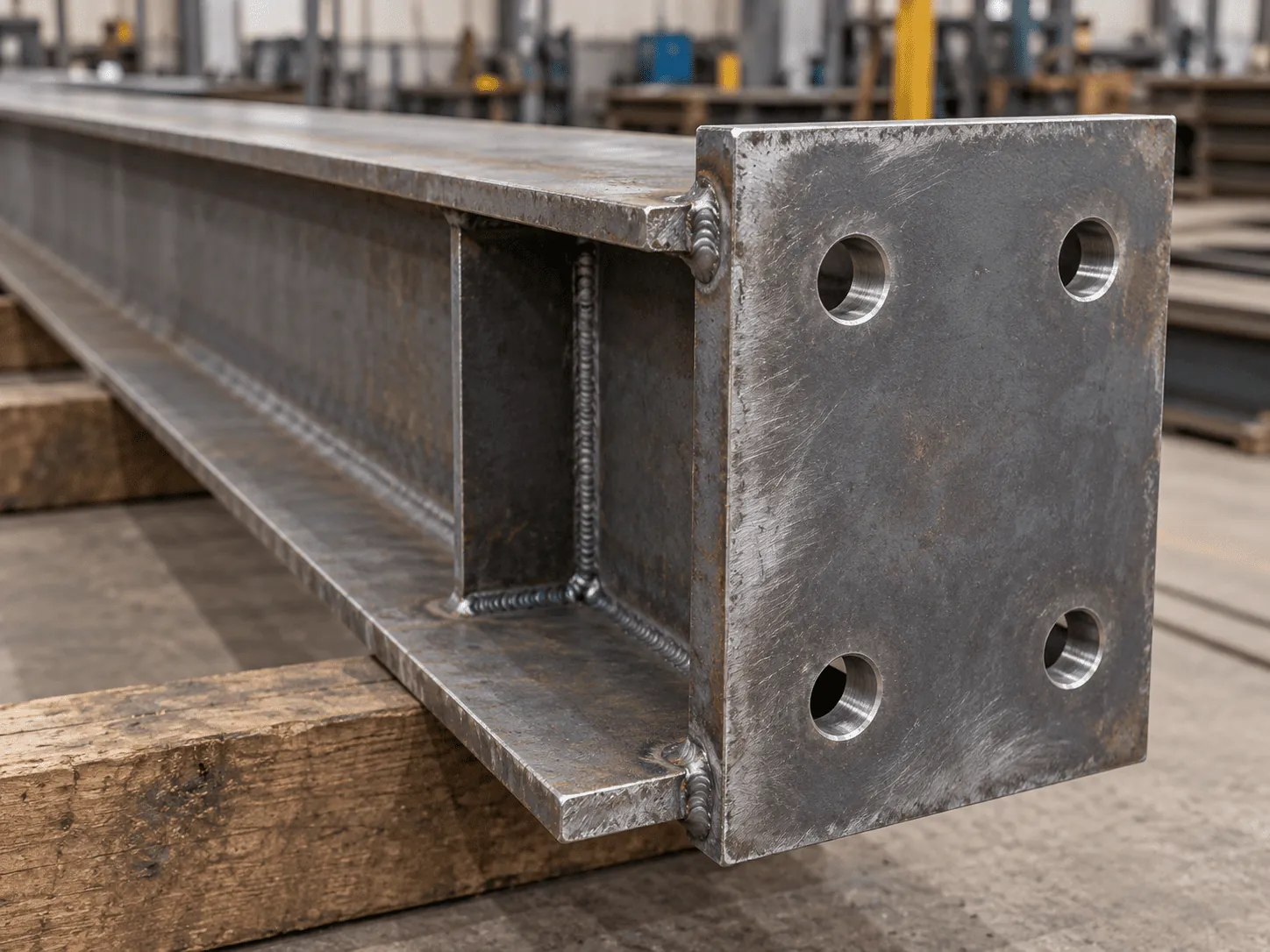
Illustrative connection detail
From section selection
to shipment-ready steel.
The production route follows the member type. Rolled sections are prepared to the required details; fabricated members add plate assembly and longitudinal welding.
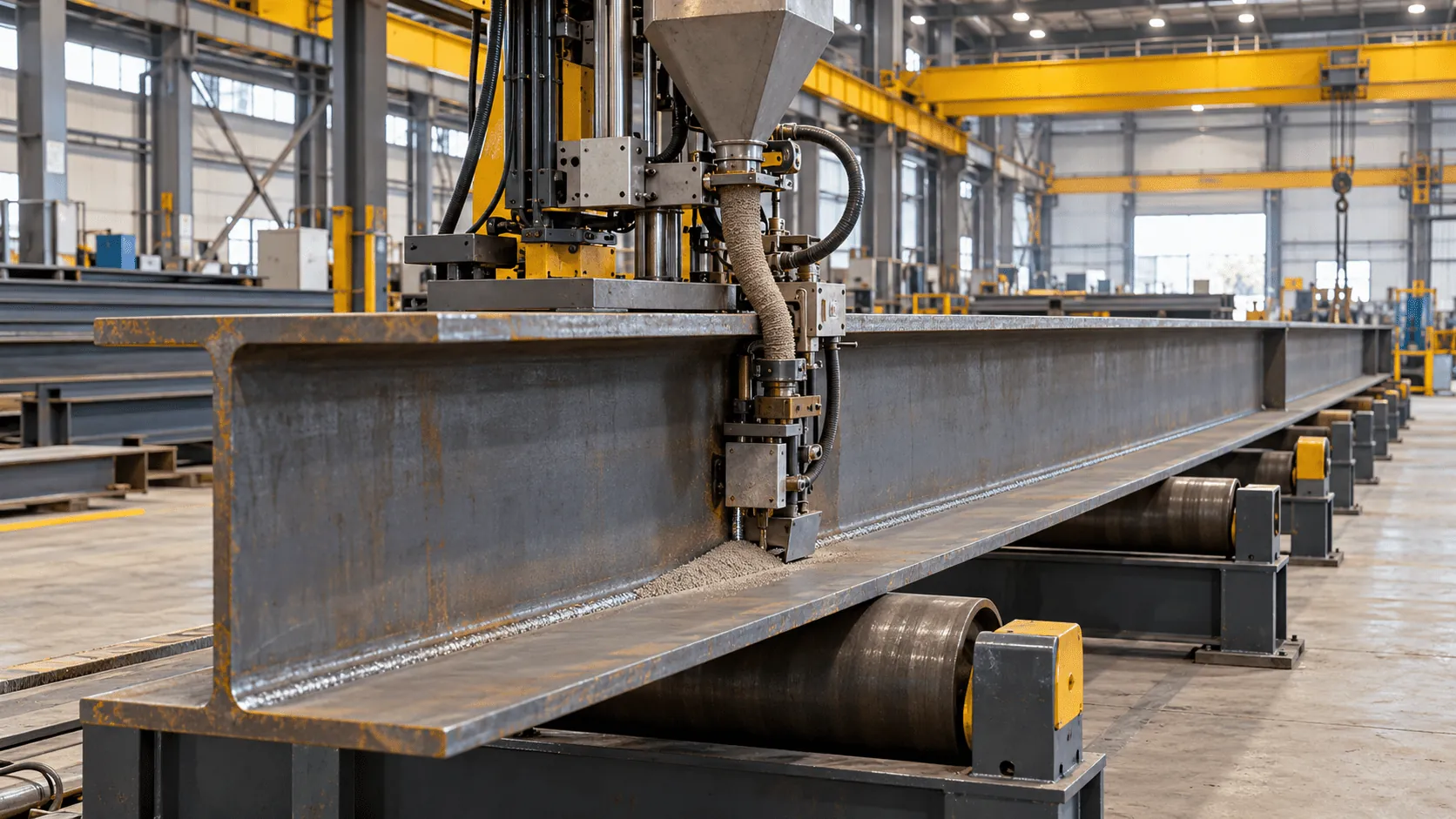
Illustrative fabrication process
Section & material review
Match section designations or plate geometry to the material and member schedule.
Cutting, assembly & welding
Prepare lengths and holes. Assemble and weld fabricated members and attached details as required.
Dimensional & finish checks
Check the specified geometry, connection positions and surface condition against project requirements.
Member identification & packing
Link finished members to their references and prepare the packing sequence.
Inspection scope and required records are agreed with the project specification.
Ready for the next stage
of your project.
Plan the shipment around the finished members, their surface condition and the intended route.
Member marks & packing list
Keep member references aligned with the packing list and shipment grouping.
Dunnage & surface protection
Set support, separation and protection requirements around the section and finish.
Destination & shipment sequence
Coordinate the destination, unloading conditions and requested delivery sequence.
Packing arrangements depend on member size, coating and transport route.
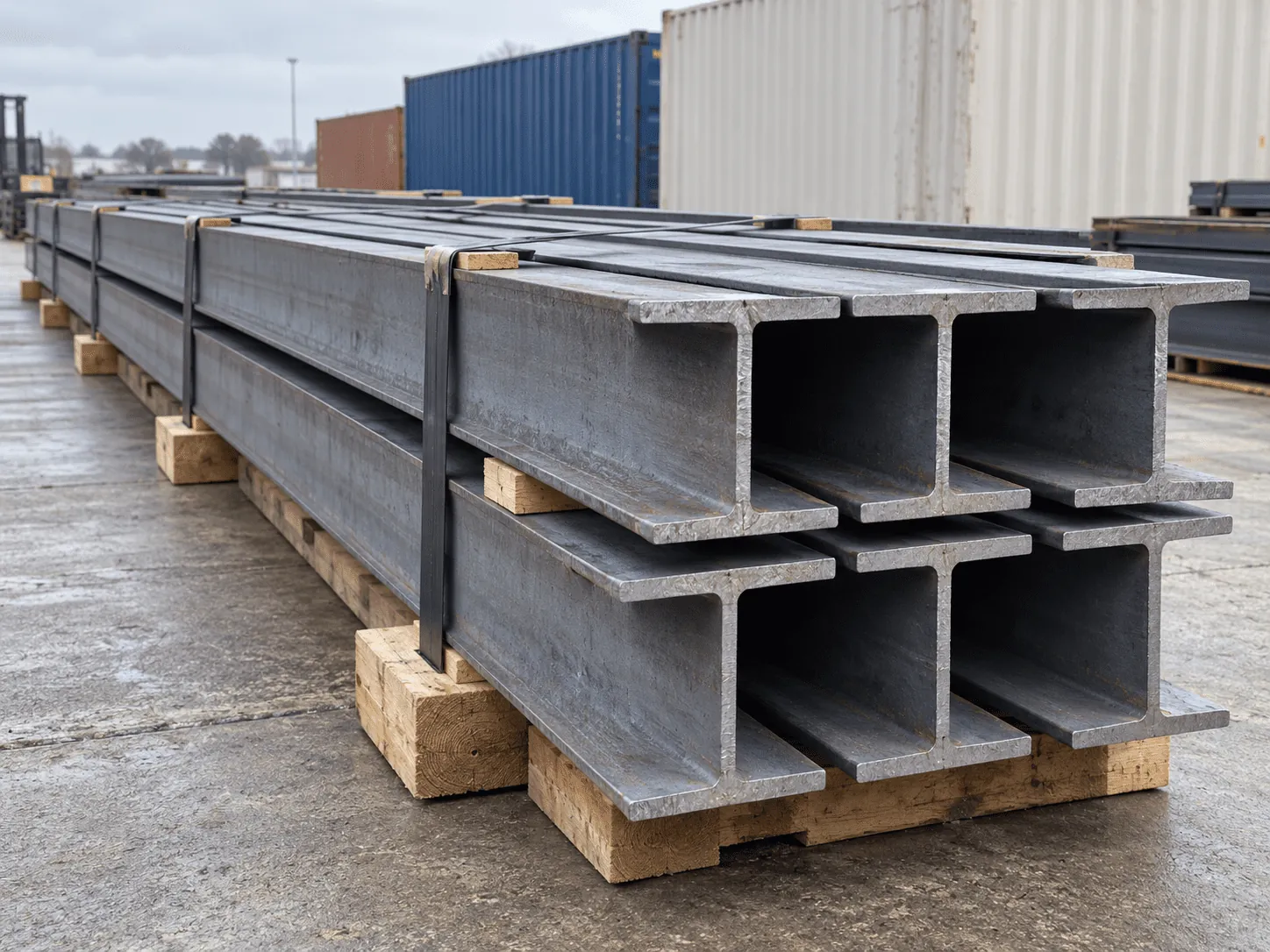
Illustrative packing arrangement
Before you
request a quote.
Start with your section type, approximate quantity and project location. Add drawings or member references when they are available.
Section designation or geometry, steel grade and project standard
Member lengths, quantities and reference numbers
Connections, finish, destination and requested schedule
Use the section type defined by your project engineer. A hot-rolled section is identified by its standard designation; a fabricated H-section is defined by its flange and web geometry and member details. Include that information in your enquiry.
Include end plates, stiffeners, brackets and hole details in the connection drawings. Their geometry and member references are reviewed as part of the requested fabrication scope.
Start with the section type, approximate quantity, project location and target date. If available, add the member schedule, material standard, connection details and finish requirements. A drawing number or revision helps keep the discussion specific.
Use the enquiry form below to describe your project and mention that drawings are available. Include a drawing reference so file exchange can be coordinated.
Get Factory-Direct Pricing Today
- Factory-Direct Pricing
- Premium Steel Quality
- Custom Engineering
- Rapid Fabrication
- Seamless Installation